
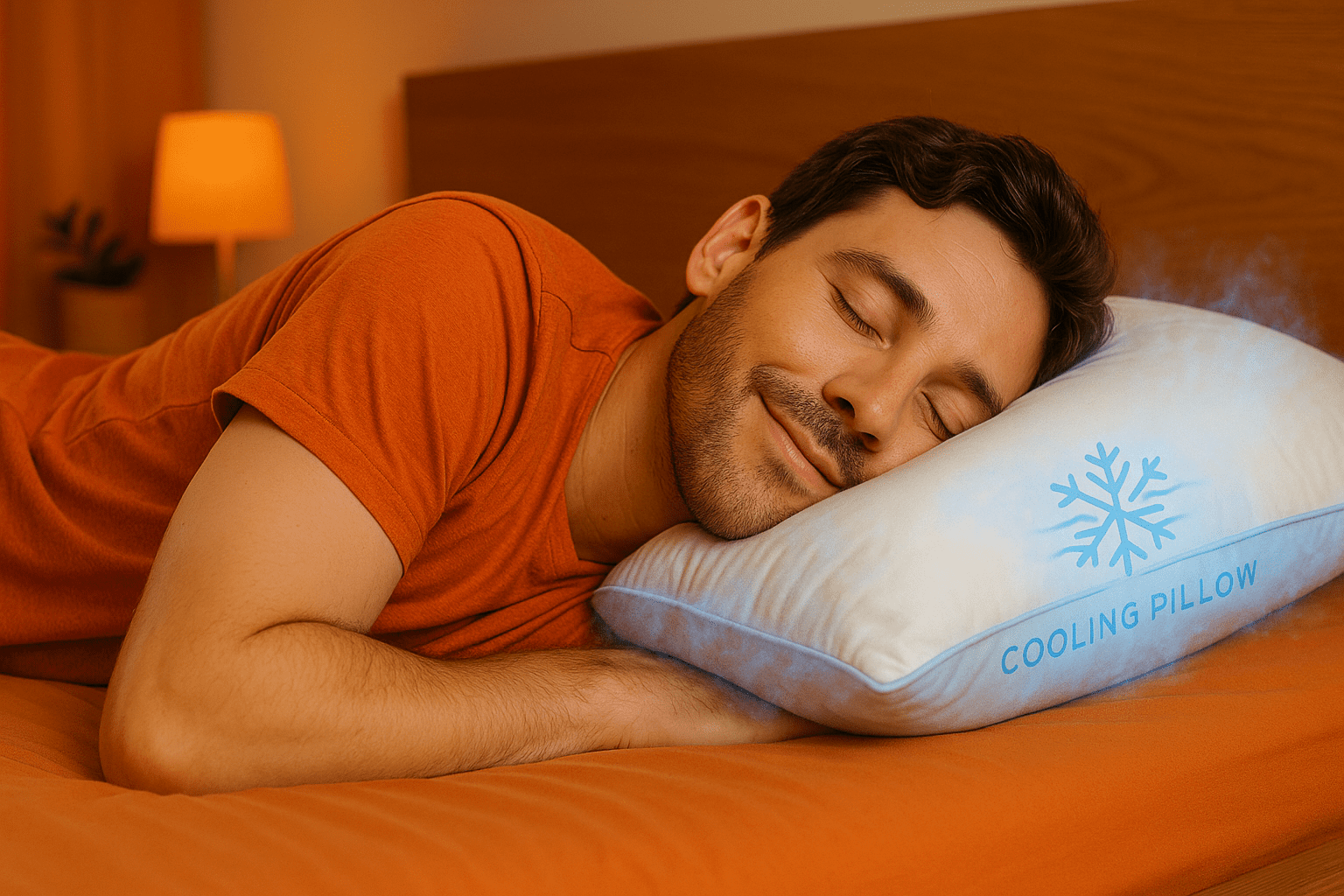
The Best Cooling Pillows (2025) For Hot Sleepers
Best cooling pillows for hot sleepers: these are the few that actually stay cool, support your neck, and cut down on night sweats. If you sleep like a space heater with regrets, you don’t need an ice bath or a Himalayan moon crystal—you need the right cooling pillow with the right height (loft) and materials. This guide explains exactly what to buy (and why) so you can stop flipping your pillow every 5 minutes and finally wake up human.
What is a Cooling PIllow?
Let’s start with the basics. A cooling pillow isn’t just a pillow made from any old cotton, it uses phase-change fabrics or gel infused foams to help pull heat away from your your skin. That doesn’t mean you won’t ever have to flip your pillow again to find the cooler side, but you’ll sure have to do it a lot less often.
best cooling pillows for hot sleepers
Hot sleepers don’t just “feel warm”—they overheat where head and neck meet the pillow. A good cooling pillow helps in two ways: (1) it pulls heat away, and (2) it moves air so heat doesn’t get trapped (think perforated foam, shredded fills, latex, or gusseted designs). You’re not chasing “cold”—you’re aiming for neutral-cool that lasts through the night while keeping your cervical spine in a neutral line.
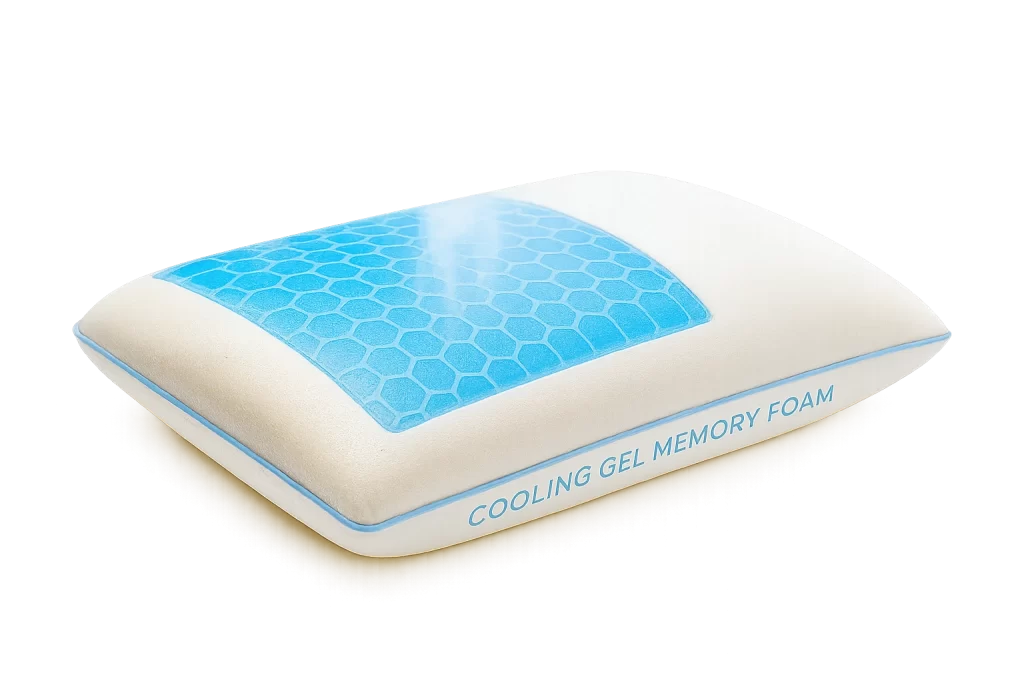
cooling gel memory foam pillow for broad-shouldered side sleepers
If you’re broad through the shoulders and mostly side sleep, start with a higher loft (typically 5–6″). Gel memory foam can work great if it’s vented and wrapped in a cool-touch cover. Look for perforations or channels for airflow, graphite/gel infusion to help disperse heat, and a phase-change (PCM) cover that feels cool to the touch. Bonus points for a gusseted edge (a side panel) that keeps loft consistent across the width so your head doesn’t dive at the edges.
breathable pillows for night sweats men (shredded foam & adjustable loft)
Waking up damp at 3 a.m.? Go adjustable. Shredded memory foam or shredded latex pillows let you add/remove fill to dial in loft for neck width and shoulder stack—while allowing more air movement than a solid foam block. Shredded latex generally sleeps cooler and has a springy, responsive feel; shredded memory foam hugs more but needs a cooling cover (Tencel/bamboo/PCM) to avoid heat build-up. Adjustable fill means fewer returns and more mornings where your neck isn’t filing a complaint.
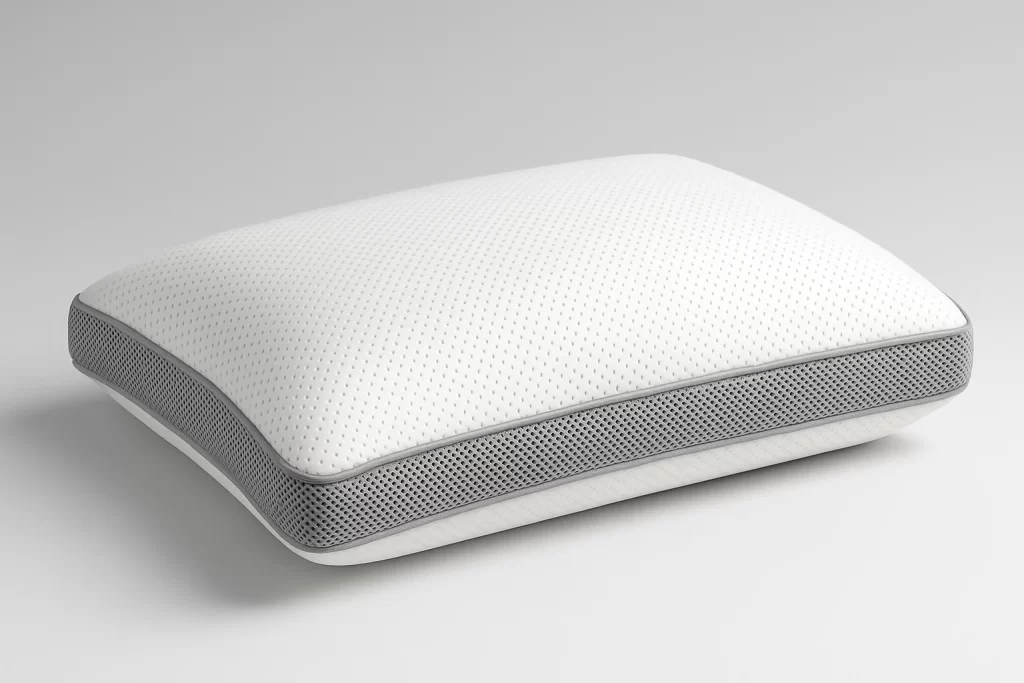
firm cooling pillow for side sleepers with neck pain
“Firm” shouldn’t mean “brick.” It means the pillow won’t collapse at 3 a.m. and kink your neck. If you’re 190–240 lbs and sleep on your side, try high-density gel foam with vent channels or solid latex with pin-holes. Loft targets: 5–6″ for broader builds, 4–5″ for average. Pro tip: if you snore when your head tilts down, a slightly taller, firmer pillow that holds your jawline level can help open the airway.
latex vs memory foam cooling pillow (which runs cooler?)
Latex usually runs cooler thanks to its open-cell structure and natural venting; it’s also bouncier (great if you change positions). Memory foam can sleep cooler if it’s upgraded: ventilated, infused with graphite/gel, and wrapped in a PCM cover. Quick rule: toss-and-turn hot sleeper → latex or shredded latex; slow-hug feel with hot sleep → ventilated gel memory foam + cool-touch cover.
Best Cooling Pillows for men who sleep on their back
Back sleepers need less loft than side sleepers. Aim for medium loft (roughly 3.5–5″) and medium firmness with a breathable cover. The quick form check: lying on your back, your forehead and chin should be level—if your chin tucks toward your chest, the pillow is too tall; if your forehead sits higher than your chin, it’s too flat. Neutral neck, quieter snoring, happier household. That will make it the best cooling pillow regardl
cooling pillowcases for men with night sweats (fabric matters more than you think)
Don’t sabotage a great pillow with a polyester pillowcase that wears like a sauna hat. Go with Tencel/lyocell or bamboo viscose for a cool hand and better wicking, crisp cotton percale for airflow, or PCM-blend knits for a cool-to-touch feel. Avoid heavy sateen if you run hot—it’s smooth but traps heat. Save it for winter…or never.
how to pick the right loft pillow for men (simple fit test)
DIY check: fold a towel under your current pillow to simulate extra loft. If your neck complains less tomorrow, you were too low.
how to choose the Best cooling pillow for men 35–60 (fit rules of thumb)
do cooling pillows really work for men who run hot?
Yes—if you get the right materials and fit. A pillow won’t fix a 78°F bedroom and a 10 p.m. espresso, but it absolutely reduces heat build-up at contact points (head/neck), which helps you fall asleep faster and stay asleep longer. Pair your pillow with a cool-touch pillowcase, breathable sheets, and a room temp around 66–68°F for best results.
care and maintenance for cooling pillows (make it last & keep it cool)
Affiliate note: We may earn a commission if you buy through our links — at no extra cost to you. We only recommend what actually works.
🧰 The Fix Kit: Cooling Sleep Essentials for Hot Sleepers
All tested, no fluff. We only link what actually works.
- 🧩 Shredded Latex, Adjustable Loft Pillow — cooler airflow with tuneable height for any build.
- 🧩 Vented Gel Memory Foam (Gusseted) — slow-hug feel without the swamp head.
- 🧩 Solid Latex, Medium-Firm — consistent support for side sleepers who run hot.
- 🧩 Cooling Pillowcase (Tencel/PCM) — cool-to-touch cover that actually breathes.
the bottom line: pick materials + loft first, brand second
You don’t need a cryogenic lab. You need a pillow that runs cooler than your current one, matches your shoulder width and sleep position, and doesn’t collapse. Dial in material (latex vs. vented gel foam), set your loft using the fit checks above, wrap it in a breathable cool-touch cover—you’ll wake up less sweaty, less sore, and more functional.
🧰 The Fix Kit: Stuff That Actually Helps You Sleep
All tested, no fluff. We only link what actually works.
- 🕶️ Felix Gray Blue-Light Glasses — because scrolling in bed isn’t going away.
- 🧊 Eight Sleep Pod Cover — your half of the bed deserves A/C too.
- 💊 Magnesium Glycinate (Beam Dream / Thorne) — like a nightcap that won’t text your ex.
- 🎧 Hatch Restore 2 — gentle light + sound that doesn’t hate you.